
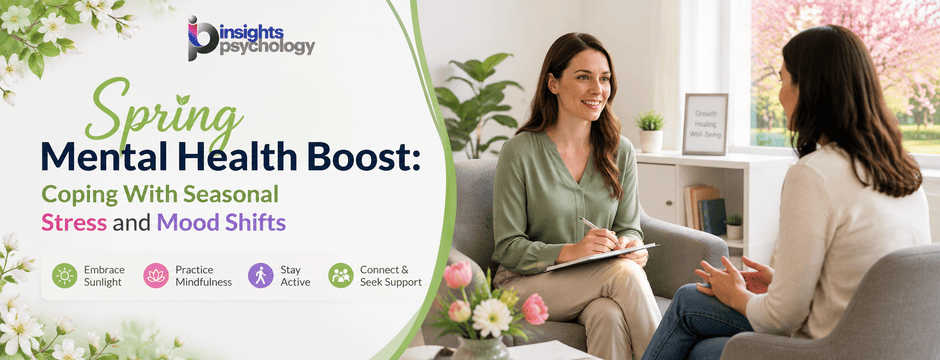
Spring is often pictured as a season of fresh starts. The days become longer, temperatures rise, and people begin spending more time outdoors. Social media fills with spring cleaning projects, fitness goals, vacations, and cheerful messages about renewed energy.
Yet spring does not feel refreshing for everyone.
For some people, the shift into a new season brings restlessness, low mood, irritability, poor sleep, or increased worry. You may feel pressure to become more active when your mind and body are still recovering from winter. You might also notice that your routine feels harder to maintain as daylight, schedules, and social expectations change.
These experiences can be confusing, especially when everyone around you seems excited about the season. Recognizing spring anxiety symptoms can help you understand what is happening and decide whether you need additional support.
At Insights Psychology, we understand that seasonal transitions can affect people in very different ways. Spring may bring relief for one person and emotional discomfort for another. Neither response makes you weak, ungrateful, or incapable. It simply means your mental health may need care during this period of change.
Why Can Spring Affect Your Mental Health?
The human body responds to environmental patterns, including light exposure, temperature, sleep timing, activity levels, and daily routines. When these patterns change, your mood and energy can change with them.
Longer daylight hours may alter sleep schedules. Warmer weather may increase social activity. School, work, family, and household responsibilities may also become busier. Even positive changes can create stress when they happen quickly.
Spring can also bring emotional expectations. People often feel they are supposed to be productive, social, motivated, and happy as soon as the weather improves. When your actual emotional state does not match that expectation, you may begin judging yourself.
You might wonder:
“Why am I still exhausted?”
“Why do I feel anxious when everyone else seems happier?”
“Why does my mood change every spring?”
These questions are more common than many people realize. The answer may involve a combination of biological, psychological, social, and lifestyle factors.
Common Spring Anxiety Symptoms
Seasonal anxiety does not look exactly the same in every person. Some people experience mainly physical tension, while others notice racing thoughts, emotional sensitivity, or changes in behavior.
Possible spring anxiety symptoms may include:
- Feeling restless or unable to settle down
- Racing thoughts, especially at night
- Difficulty falling asleep or staying asleep
- Waking earlier than usual
- Increased irritability or impatience
- Trouble concentrating
- Muscle tension or headaches
- Changes in appetite
- Feeling overwhelmed by social plans
- Avoiding activities you would normally enjoy
- A sense of pressure to “get your life together”
- Increased worry about work, relationships, health, or appearance
A few stressful days do not necessarily indicate an anxiety disorder. However, symptoms deserve attention when they persist, interfere with daily responsibilities, affect relationships, or make it difficult to enjoy life.
Why Does My Anxiety Get Worse in Spring?
Many people search for an answer to the question, why does my anxiety get worse in spring, because the experience can feel unexpected.
One possible factor is the disruption of your internal body clock. Longer days can affect when you feel awake, tired, hungry, or mentally alert. If your sleep schedule shifts suddenly, you may feel emotionally unsettled.
Spring also tends to increase activity. Children may have busier school calendars. Adults may face new work deadlines, travel plans, home projects, or social commitments. A calendar that fills quickly can create mental overload.
Other possible triggers include:
Increased Social Pressure
Warmer weather often brings invitations, family events, outdoor gatherings, and travel. For someone with social anxiety, body image concerns, or limited emotional energy, these expectations can feel demanding rather than enjoyable.
Allergy Symptoms
Seasonal allergies can contribute to fatigue, poor sleep, headaches, and difficulty concentrating. When you already feel physically uncomfortable, managing stress may become harder.
Changes in Routine
Winter routines may be predictable, even if they are not ideal. Spring can disrupt meal times, sleep habits, exercise schedules, childcare arrangements, and work patterns. People who depend on consistency may find these transitions particularly challenging.
Comparison and Self-Criticism
Spring messaging often focuses on transformation. You may see content encouraging you to clean your home, change your body, become more productive, travel, socialize, or begin a major life project. Constant comparison can create the impression that you are falling behind.
Unresolved Winter Stress
The arrival of better weather does not automatically erase loneliness, grief, burnout, relationship problems, or financial pressure. Sometimes spring highlights the difference between how you believe you should feel and how you actually feel.
Understanding Seasonal Mood Changes in Spring
Not every emotional change is a mental health disorder. Mild seasonal mood changes in spring may appear as temporary irritability, disrupted sleep, fluctuating energy, or difficulty adjusting to a faster schedule.
These changes may improve as your body and routine adapt. Supportive habits such as consistent sleep, regular meals, outdoor time, and realistic planning can make the transition easier.
However, seasonal changes should not be dismissed when they become intense or persistent. A mental health professional can help determine whether your symptoms are connected to stress, anxiety, depression, trauma, burnout, a sleep problem, another health condition, or a recurring seasonal pattern.
Keeping a simple mood record may help. Note your sleep, energy, anxiety level, appetite, social activity, and significant stressors for several weeks. Patterns often become easier to identify when they are written down.
Spring Depression Symptoms Can Be Easy to Miss
Depression is often associated with winter, but some people experience worsening symptoms during spring or early summer. The National Institute of Mental Health recognizes that a less common spring or summer pattern of seasonal affective disorder can occur.
Possible spring depression symptoms may include:
- Persistent sadness or emptiness
- Loss of interest in usual activities
- Irritability or agitation
- Reduced appetite
- Unplanned weight loss
- Difficulty sleeping
- Low energy despite longer daylight
- Trouble making decisions
- Feelings of guilt, worthlessness, or hopelessness
- Pulling away from friends and family
- Difficulty completing basic responsibilities
- Thoughts of death or self-harm
Symptoms can vary considerably. Some people feel slowed down and exhausted. Others feel restless, tense, or emotionally on edge.
What matters is not whether your experience matches someone else’s description. What matters is how long the symptoms last, how severe they become, and how much they affect your ability to function.
Can Seasonal Affective Disorder Happen in Spring?
Yes, although it is less common than the fall and winter pattern.
Seasonal affective disorder in spring is not simply disliking warm weather. Seasonal affective disorder, commonly called SAD, is a form of depression with a recurring seasonal pattern. Symptoms tend to begin and end around similar times of the year.
Most cases begin in fall or winter and improve in spring. A smaller number of people experience symptoms beginning in spring or summer and improving during fall or winter.
A seasonal pattern cannot usually be established from one difficult spring. A qualified provider will consider your symptom history, timing, functioning, medical background, sleep, medications, and other possible explanations.
Avoid diagnosing yourself based only on an online checklist. Similar symptoms may be related to generalized anxiety, major depression, bipolar disorder, trauma, hormonal changes, sleep disorders, medication effects, substance use, or physical health conditions.
A professional evaluation provides a clearer and safer understanding of what you are experiencing.
Practical Ways to Support Your Mental Health This Spring
Small, consistent adjustments often provide more benefit than trying to transform your entire life at once.
Protect Your Sleep Schedule
Longer daylight can tempt you to stay awake later, but inconsistent sleep may worsen irritability, anxiety, and concentration problems.
Try to keep your bedtime and wake time relatively steady. Dim bright lights and reduce stimulating screen use before bed. Create a short evening routine that signals to your body that the day is ending.
If sleep problems continue for several weeks, discuss them with a health care or mental health professional.
Slow Down Your Spring Calendar
You do not need to accept every invitation or begin every project. Leave open time between commitments. Before saying yes, consider your emotional energy, travel time, responsibilities, and need for recovery.
A full calendar is not proof of a full life.
Return to Basic Physical Care
Regular meals, hydration, movement, and rest can support emotional stability. You do not need an intensive fitness plan. A walk, gentle stretching, gardening, or another manageable activity can help you reconnect with your body.
Choose movement that feels supportive rather than punishing.
Notice What Triggers the Shift
Ask yourself when your symptoms become strongest. Is it after poor sleep? During crowded social events? While scrolling through social media? When your workload increases? When allergy symptoms flare?
Identifying triggers can help you make targeted changes instead of blaming yourself for feeling unwell.
Reduce Seasonal Comparison
Someone else’s spring highlight reel does not show their complete life. Consider limiting accounts or content that trigger shame, urgency, or dissatisfaction.
Replace “I should be doing more” with a more useful question:
“What would help me feel steady today?”
Use Grounding Skills
When anxiety rises, bring your attention back to the present. Notice the surface under your feet, relax your jaw, and slow your breathing. Name a few things you can see, hear, and feel.
Grounding will not remove every source of stress, but it can help your nervous system move out of an immediate alarm response.
Build One Reliable Routine
Trying to rebuild your entire schedule may feel overwhelming. Start with one anchor habit, such as eating breakfast, walking after lunch, preparing for bed at the same time, or planning the next day before leaving work.
A dependable routine can create stability while the season changes around you.
When Self-Care Is Not Enough
Healthy routines can support mental health, but they are not substitutes for professional care when symptoms are persistent or severe.
Consider reaching out for help when:
- Anxiety or low mood lasts most days
- Your sleep has changed significantly
- You are missing work, school, or appointments
- Relationships are becoming strained
- You rely on alcohol or substances to cope
- You feel unable to control your worry
- Activities that once mattered no longer feel enjoyable
- The same pattern returns each spring
- You feel hopeless, trapped, or unsafe
Therapy can help you understand the connection between seasonal changes, thought patterns, behaviors, stress, and emotional responses. It can also help you create a plan that is based on your actual needs rather than generic seasonal advice.
How Therapy Can Help With Seasonal Stress
Therapy provides space to explore what spring represents in your life.
For one person, spring may bring memories of a loss or difficult event. For another, it may trigger social anxiety, body image concerns, parenting stress, or pressure to become more productive. Someone else may be struggling with depression that happens to worsen during the same season each year.
A therapist may help you:
- Identify patterns in mood, sleep, and anxiety
- Understand personal and environmental triggers
- Challenge self-critical thinking
- Develop healthier responses to stress
- Establish realistic routines
- Improve emotional regulation
- Address avoidance and social withdrawal
- Prepare for future seasonal transitions
- Decide whether coordination with a medical provider is appropriate
Psychotherapy is one of the treatment approaches that may be used for seasonal affective disorder. Treatment decisions should be individualized, particularly when medication, light therapy, bipolar disorder, or another health condition may be involved.
Our resource can help you begin identifying the habits, expectations, and pressures that affect your well-being during periods of change.
People experiencing a recurring depressive pattern may also benefit from learning more about therapy for seasonal depression in Minnesota. A thoughtful evaluation can clarify whether symptoms reflect a seasonal pattern or another mental health concern.
Finding the Right Support in Minnesota
Minnesota’s changing daylight, long winters, and rapid seasonal transitions can influence routines and emotional well-being. Still, location alone does not explain every mood change. Your personal history, relationships, responsibilities, physical health, and current stress levels all matter.
Working with a mental health therapist in Minnesota gives you an opportunity to discuss your symptoms in the context of your real life. Therapy is not only for moments of crisis. It can also help when you notice a recurring pattern and want to respond before it becomes more disruptive.
At Insights Psychology, care begins with listening. We do not assume that every spring-related concern has the same cause or requires the same approach. Our goal is to understand what you are experiencing and help you find practical, sustainable ways to feel more grounded.
Give Yourself Permission to Experience Spring Differently
You are not required to feel cheerful simply because the weather is improving.
Spring can be beautiful and difficult at the same time. You may appreciate the sunlight while still feeling anxious. You may want connection while needing more rest. You may feel hopeful one day and emotionally drained the next.
Rather than forcing yourself to match the mood of the season, pay attention to what your mind and body are communicating.
If spring anxiety symptoms, low mood, irritability, or sleep problems are interfering with daily life, professional support can help. You do not have to wait until the symptoms become unbearable.
Insights Psychology offers compassionate mental health support for individuals who want to understand their emotional patterns, strengthen coping skills, and move through seasonal changes with greater stability.
Spring does not have to become a test of how productive, social, or positive you can be. It can become an opportunity to notice what you need and begin caring for yourself with more honesty.
Frequently Asked Questions
1. What are the most common spring anxiety symptoms?
Common symptoms may include restlessness, racing thoughts, irritability, muscle tension, trouble sleeping, difficulty concentrating, increased worry, and feeling overwhelmed by social or personal expectations. Symptoms vary, so an evaluation may be helpful when they persist or disrupt daily life.
2. Why does my anxiety get worse in spring?
Spring may affect anxiety because of changing daylight, disrupted sleep, increased social commitments, seasonal allergies, routine changes, and pressure to become more active or productive. Personal memories and existing mental health conditions may also play a role.
3. What are the signs of spring depression?
Spring depression may involve persistent sadness, irritability, reduced interest in activities, changes in appetite, sleep difficulties, low energy, hopelessness, social withdrawal, or trouble managing daily responsibilities. A professional assessment can help determine the cause.
4. Is seasonal affective disorder in spring a real condition?
Yes. Although seasonal affective disorder more commonly begins in fall or winter, a less common pattern can begin in spring or summer. Diagnosis usually requires evidence of a recurring seasonal pattern and a careful evaluation by a qualified professional.
5. When should I contact a therapist about seasonal mood changes?
Consider contacting a therapist when symptoms last for several weeks, return during the same season, affect work or relationships, interfere with sleep, or make daily responsibilities difficult. Seek immediate crisis support if you are thinking about harming yourself or do not feel safe.
Feeling stuck while managing Spring Anxiety? Explore the powerful psychology behind motivation and discover what can help spark meaningful action.