
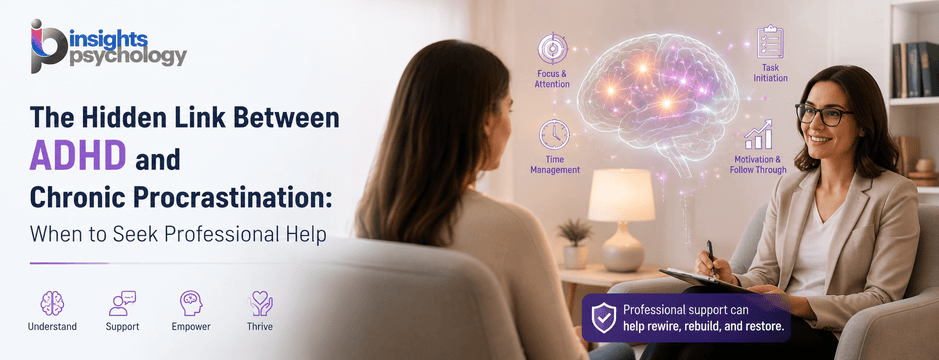
Many people assume procrastination is simply a bad habit. They tell themselves they need more discipline, better time management, or stronger motivation. However, for some individuals, persistent procrastination may be a sign of something deeper: Attention-Deficit/Hyperactivity Disorder (ADHD).
If you’ve spent years missing deadlines, starting projects at the last minute, or feeling overwhelmed by everyday tasks despite your best intentions, the issue may not be laziness. Understanding the connection between ADHD and procrastination can be the first step toward meaningful change and effective ADHD procrastination treatment.
What Is the Connection Between ADHD and Procrastination?
ADHD is a neurodevelopmental condition that affects attention, focus, impulse control, and executive functioning. Executive functions are the brain’s management system responsible for planning, prioritizing, organizing, and completing tasks.
When executive functioning is impaired, procrastination often follows.
Quick Definition
ADHD-related procrastination is the repeated delay of important tasks due to challenges with focus, task initiation, emotional regulation, and executive functioning—not a lack of motivation.
People with ADHD often know exactly what they need to do. The challenge is getting started and staying engaged long enough to finish.
Why Does ADHD Cause Chronic Procrastination?
Several ADHD-related factors contribute to chronic procrastination.
1. Executive Dysfunction
Executive dysfunction makes it difficult to:
- Start tasks
- Break projects into manageable steps
- Prioritize responsibilities
- Maintain attention
- Follow through consistently
This is why executive dysfunction therapy is often a core component of treatment.
2. Time Blindness
Many individuals with ADHD struggle to accurately perceive time.
They may underestimate how long tasks will take or fail to recognize approaching deadlines until urgency creates panic.
3. Difficulty Regulating Emotions
Procrastination is often emotional rather than organizational.
Tasks that feel boring, overwhelming, stressful, or confusing may trigger avoidance behaviors.
4. Dopamine-Seeking Behavior
The ADHD brain naturally seeks stimulation and reward.
Routine responsibilities may feel uninteresting, causing the brain to prioritize more engaging activities instead.
What Are Three Common Causes of Procrastination?
While procrastination can have many triggers, mental health professionals frequently identify three primary causes:
1. Executive Function Challenges
People with ADHD often struggle with planning, organizing, prioritizing, and initiating tasks.
2. Fear of Failure
Many individuals delay tasks because they worry about making mistakes or not meeting expectations.
3. Emotional Avoidance
Tasks that feel stressful, boring, overwhelming, or uncomfortable are more likely to be postponed.
For individuals with ADHD, these causes often overlap, creating a cycle that becomes increasingly difficult to break without support.
ADHD Procrastination vs Typical Procrastination
|
Typical Procrastination |
ADHD-Related Procrastination |
|
Occasional delay |
Persistent pattern |
|
Usually task-specific |
Impacts multiple life areas |
|
Improved with motivation |
Continues despite motivation |
|
Deadline reminders help |
Reminders often ineffective |
|
Rarely affects daily functioning |
Frequently affects work, school, and relationships |
Understanding this distinction is important because generic productivity advice may not address the underlying neurological challenges.
When Procrastination Becomes a Mental Health Concern
Everyone procrastinates occasionally.
However, professional support may be beneficial when procrastination begins affecting:
- Job performance
- Academic success
- Financial responsibilities
- Personal relationships
- Self-esteem
- Emotional well-being
Research consistently shows a strong relationship between mental health and procrastination, particularly when anxiety, depression, or ADHD are present.
The Anxiety-Procrastination Cycle
Many people experience both anxiety and procrastination simultaneously.
The cycle often looks like this:
- A task feels overwhelming.
- Anxiety increases.
- The task is avoided.
- Deadlines approach.
- Anxiety worsens.
- Productivity decreases further.
Over time, this cycle can become emotionally exhausting and difficult to break without professional guidance.
What Type of People Procrastinate the Most?
Contrary to popular belief, procrastination is not limited to unmotivated individuals. Research and clinical experience suggest that procrastination is often most common among:
- People with ADHD
- Individuals experiencing anxiety disorders
- Perfectionists
- Highly creative thinkers
- People dealing with chronic stress or burnout
- Individuals with executive functioning difficulties
- Students and professionals facing high-pressure environments
Many high-achieving individuals procrastinate because their standards are so high that getting started feels overwhelming.
What Personality Type Is Most Likely to Procrastinate?
While anyone can procrastinate, procrastination tends to be more common among individuals who are:
- Perfectionistic
- Highly self-critical
- Sensitive to failure or rejection
- Easily overwhelmed by large tasks
- Impulsive or novelty-seeking
In ADHD, procrastination often stems from neurological differences rather than personality traits alone.
What Are the 4 Main Types of Procrastination?
Mental health professionals commonly categorize procrastination into four broad types:
The Perfectionist
Delays tasks due to fear of making mistakes.
The Avoider
Postpones responsibilities to avoid discomfort, criticism, or stress.
The Overwhelmed Procrastinator
Struggles to begin because tasks feel too large or complicated.
The Thrill Seeker
Relies on last-minute pressure and adrenaline to complete work.
Understanding your procrastination style can help identify the most effective treatment approach.
Signs You May Need ADHD Procrastination Treatment
Consider seeking professional help if you frequently:
- Miss important deadlines
- Feel overwhelmed by simple tasks
- Struggle to start projects despite wanting to complete them
- Experience chronic stress from unfinished responsibilities
- Depend on last-minute pressure to function
- Feel guilty about procrastination but cannot stop
- Notice procrastination affecting your career or relationships
These patterns often indicate underlying executive functioning challenges rather than poor work ethic.
What Does ADHD Procrastination Treatment Involve?
Effective treatment focuses on both symptoms and root causes.
ADHD Assessment
A comprehensive psychological evaluation can determine whether ADHD, anxiety, depression, or another condition contributes to procrastination difficulties.
At Insights Psychology, clinicians evaluate the full picture rather than focusing solely on symptoms.
Cognitive Behavioral Therapy (CBT)
CBT helps individuals:
- Challenge unhelpful thinking patterns
- Reduce avoidance behaviors
- Develop realistic productivity habits
- Improve emotional regulation
CBT remains one of the most effective evidence-based approaches for chronic procrastination help.
Executive Function Coaching and Therapy
Executive dysfunction therapy focuses on practical skills such as:
- Planning
- Organization
- Prioritization
- Time management
- Goal setting
These strategies help bridge the gap between intention and action.
ADHD Medication Management
For some individuals, medication may improve:
- Focus
- Task initiation
- Attention regulation
- Productivity
Medication decisions should always be made with qualified healthcare professionals.
Expert Insight
“Chronic procrastination is rarely a character flaw. In many cases, it reflects underlying difficulties with executive functioning, emotional regulation, or ADHD-related neurological processes. Treating the root cause often produces better outcomes than relying solely on productivity techniques.”
This perspective is increasingly supported by mental health professionals who recognize procrastination as a symptom rather than a personal failure.
The 4 Questions to Stop Procrastination
Many therapists encourage clients to pause and ask:
- What exactly am I avoiding?
- Why does this task feel difficult right now?
- What is the smallest step I can take?
- What will happen if I continue delaying?
These questions help reduce overwhelm and create momentum.
What Are the Most Common Types of Procrastination?
Experts commonly identify several patterns:
- Perfectionist procrastination
- Avoidant procrastination
- Overwhelmed procrastination
- Thrill-seeker procrastination
- Decision paralysis procrastination
- Fear-based procrastination
- ADHD-related procrastination
Recognizing your pattern can help guide more effective treatment strategies.
Common Mistakes People Make When Addressing Procrastination
Many individuals unintentionally make procrastination worse by:
- Labeling themselves as lazy
- Using shame as motivation
- Relying solely on willpower
- Ignoring underlying ADHD symptoms
- Waiting for motivation before starting
- Comparing themselves to others
These approaches often increase frustration without addressing the root issue.
Practical Strategies You Can Start Today
While professional support may be necessary, these strategies can help immediately:
Use the Two-Minute Rule
If a task takes less than two minutes, complete it immediately.
Break Tasks Into Tiny Steps
Instead of “write report,” start with:
- Open document
- Write title
- Create outline
Create Artificial Deadlines
Smaller deadlines reduce overwhelm and improve accountability.
Use Body Doubling
Working alongside another person can improve focus and task completion.
Schedule Energy, Not Just Time
Complete demanding tasks during your most productive hours.
What Is the First Step to Stop Procrastination?
The first step is awareness.
Many people try to solve procrastination before understanding why it occurs. Identifying the underlying cause—whether ADHD, anxiety, perfectionism, stress, or executive dysfunction—creates the foundation for lasting change.
Instead of asking, “How do I force myself to work?” ask:
“What is making this task difficult to start?”
This shift often reveals the real barrier that needs attention.
What Are the 7 Steps to Cure Procrastination?
While there is no instant cure, these seven evidence-based steps can significantly reduce procrastination:
1. Identify the Root Cause
Determine whether ADHD, anxiety, perfectionism, burnout, or another factor is contributing.
2. Break Tasks Into Small Steps
Smaller tasks reduce overwhelm and improve momentum.
3. Create Realistic Deadlines
Large projects become more manageable when divided into milestones.
4. Reduce Distractions
Create an environment that supports focus.
5. Use Accountability Systems
Coaches, therapists, coworkers, or trusted friends can help maintain consistency.
6. Address Emotional Barriers
Learn strategies to manage fear, anxiety, and self-criticism.
7. Seek Professional Support When Needed
Therapy and ADHD treatment can address the underlying causes of chronic procrastination.
What Are the 7 Dangers of Chronic Procrastination?
Occasional procrastination is normal, but chronic procrastination can have serious consequences.
1. Increased Stress
Deadlines become more stressful when tasks are repeatedly delayed.
2. Anxiety and Depression
Persistent avoidance often contributes to emotional distress.
3. Lower Work Performance
Missed deadlines can affect career growth and professional reputation.
4. Academic Difficulties
Students may struggle with grades and long-term educational goals.
5. Financial Problems
Bills, taxes, and financial responsibilities may be neglected.
6. Relationship Strain
Repeated delays can create frustration and conflict with others.
7. Reduced Self-Confidence
Over time, chronic procrastination can damage self-esteem and create feelings of failure.
These consequences highlight why addressing procrastination early is so important.
Key Takeaways
- Chronic procrastination may be a symptom of ADHD rather than laziness.
- Executive dysfunction often plays a major role in task avoidance.
- Anxiety and procrastination frequently reinforce one another.
- Effective ADHD procrastination treatment addresses both behavioral and neurological factors.
- Therapy, executive functioning support, and psychological assessment can provide lasting solutions.
- Early intervention can improve productivity, confidence, and overall well-being.
What Is the True Cure for Procrastination?
There is no single universal cure for procrastination because procrastination itself is often a symptom rather than the problem.
The most effective solution is identifying and treating the underlying cause.
For some people, that may mean developing better habits and time-management skills. For others, it may involve addressing anxiety, perfectionism, executive dysfunction, or ADHD through therapy and professional support.
Expert Perspective
“The true cure for procrastination is not working harder—it is understanding why the brain is avoiding action and addressing that root cause directly.”
When procrastination is linked to ADHD, evidence-based ADHD procrastination treatment often provides the most meaningful and lasting results.
When Should You Seek Professional Help?
If procrastination consistently interferes with your work, education, relationships, or emotional health, professional support may be beneficial.
Working with a qualified therapist for procrastination can help identify underlying causes and develop personalized strategies for long-term success.
Rather than asking, “Why can’t I just get things done?” a more helpful question may be:
“What is preventing my brain from getting started?”
The answer often leads to meaningful solutions.
Ready to Break Free From Chronic Procrastination?
If ADHD symptoms, executive dysfunction, or anxiety are making it difficult to move forward, professional support can help.
Frequently Asked Questions
1. Can ADHD cause severe procrastination?
Yes. ADHD frequently affects executive functioning, making it difficult to start, organize, and complete tasks. Severe procrastination is a common symptom.
2. What is the best ADHD procrastination treatment?
Treatment often includes ADHD assessment, cognitive behavioral therapy, executive dysfunction therapy, coaching, and, when appropriate, medication management.
3. Is procrastination always a sign of ADHD?
No. Procrastination can also be linked to anxiety, depression, perfectionism, stress, or burnout. A professional evaluation can identify the root cause.
4. How do I know if I need chronic procrastination help?
If procrastination repeatedly affects your work, relationships, finances, or emotional well-being, professional support may be beneficial.
5. Can anxiety and procrastination occur together?
Yes. Anxiety often leads to task avoidance, while procrastination increases stress and anxiety, creating a difficult cycle to break.
6. Can therapy help with procrastination?
Absolutely. Therapy can address emotional barriers, improve executive functioning skills, and develop practical strategies for task completion.
7. How can I find a procrastination counselor near me?
Search for a licensed psychologist or mental health professional experienced in ADHD, executive functioning, and procrastination-related challenges. A comprehensive evaluation is often the best starting point.
Successful ADHD Procrastination Treatment starts with choosing the right support. Compare proven therapy options before making your next appointment.



