
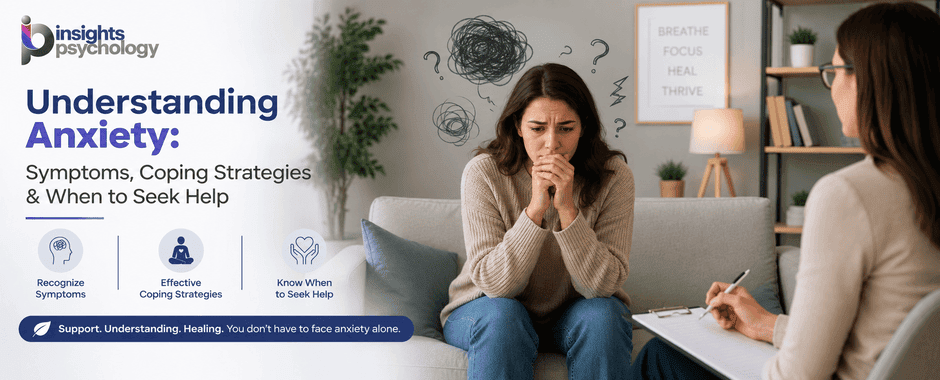
Anxiety doesn’t always look like a panic attack. Sometimes, it shows up as lying awake at night, replaying a conversation, worrying about tomorrow, or feeling tense even when nothing seems wrong.
For some people, anxiety means a racing heart before an important meeting. For others, it involves persistent worry, difficulty concentrating, or avoiding situations that once felt manageable.
These experiences can be confusing, especially when you’re unsure whether what you’re feeling is ordinary stress or something that deserves professional attention.
Recognizing anxiety symptoms can help you understand what’s happening emotionally and physically. It can also help you identify practical anxiety coping strategies and recognize when additional support may be beneficial.
At Insights Psychology, we understand that anxiety affects everyone differently. Our clinicians help individuals explore their concerns, recognize patterns that contribute to distress, and develop healthier ways to manage anxiety in everyday life.
What Is Anxiety?
Anxiety is the body’s natural response to stress, uncertainty, or perceived danger. It can help you remain alert and prepare for challenging situations, such as an important presentation, medical appointment, or difficult conversation.
Occasional anxiety is a normal part of life. However, when worry becomes persistent, difficult to control, or disproportionate to the situation, it may begin affecting your emotional well-being and daily functioning.
Anxiety can influence your thoughts, physical sensations, emotions, and behavior. Some people experience constant worry, while others notice restlessness, muscle tension, or difficulty sleeping.
The symptoms of fear and anxiety often overlap, but they are not exactly the same. Fear generally occurs in response to an immediate or identifiable threat, while anxiety often involves anticipation of a possible future threat.
Experiencing anxiety doesn’t automatically mean you have an anxiety disorder. A qualified mental health professional can evaluate your symptoms, their duration, and their impact on your daily life to determine whether treatment may be appropriate.
Common Symptoms of Anxiety
Anxiety affects more than your thoughts. It can influence how you feel, behave, sleep, concentrate, and respond to everyday situations.
Some people primarily experience emotional distress, while others notice physical discomfort or changes in their behavior.
The symptoms of an anxious person may not always be obvious to others. Someone may appear calm and productive while experiencing persistent worry, tension, or emotional exhaustion.
Common physical symptoms can include a rapid heartbeat, sweating, trembling, stomach discomfort, muscle tension, dizziness, and sleep disturbances. These symptoms can also occur with medical conditions, so new or concerning physical changes should not automatically be attributed to anxiety.
Emotional symptoms
The emotional effects of anxiety can make ordinary responsibilities feel more difficult than usual.
Common emotional symptoms include:
- Feeling nervous, tense, or constantly on edge
- Experiencing excessive worry or apprehension
- Feeling overwhelmed by everyday responsibilities
- Becoming easily irritated or frustrated
- Having difficulty relaxing
- Feeling emotionally exhausted
- Experiencing fear without an obvious immediate threat
- Feeling uncomfortable with uncertainty
These psychological anxiety symptoms may become more noticeable during stressful periods, but they can also persist when there is no clear external trigger.
For example, you might finish a productive workday yet continue feeling uneasy because you’re worried about something that could happen tomorrow.
When emotional distress becomes persistent or interferes with daily activities, professional support can help identify possible contributing factors.
Cognitive symptoms
Anxiety can affect concentration, memory, decision-making, and the way you interpret everyday situations.
Common cognitive symptoms include:
- Persistent or excessive worrying
- Racing thoughts
- Difficulty concentrating
- Repeatedly imagining worst-case scenarios
- Overthinking conversations or decisions
- Fear of making mistakes
- Difficulty tolerating uncertainty
- Constantly seeking reassurance
- Trouble making decisions
- Difficulty shifting attention away from worries
Anxiety can make uncertain situations feel more threatening than they actually are.
For instance, receiving a brief message from your manager might lead to hours of worrying about job security, even when there is no evidence that something is wrong.
These thinking patterns can become exhausting, particularly when they affect sleep, productivity, or personal relationships.
Cognitive Behavioral Therapy (CBT) can help individuals identify unhelpful thought patterns and develop more balanced responses to anxious thoughts.
Behavioral symptoms
Anxiety can also influence your actions, habits, and interactions with others.
Common behavioral symptoms include:
- Avoiding social gatherings or unfamiliar situations
- Delaying tasks because of fear of making mistakes
- Frequently checking messages, appointments, or responsibilities
- Seeking repeated reassurance from others
- Overpreparing for ordinary activities
- Leaving uncomfortable situations early
- Avoiding conversations or decisions
- Becoming overly dependent on predictable routines
- Having difficulty participating in previously enjoyable activities
Avoidance may temporarily reduce anxiety, but it can also reinforce fear over time.
For example, avoiding a social event might provide immediate relief. However, repeatedly avoiding similar situations can make future interactions feel increasingly difficult.
Some individuals also experience sudden episodes of intense fear or discomfort known as panic attacks.
Common symptoms of anxiety attack include a racing or pounding heartbeat, sweating, trembling, shortness of breath, dizziness, chest discomfort, nausea, and fear of losing control.
Although people often use the term anxiety attack, clinicians generally use the term panic attack when referring to a sudden surge of intense fear or discomfort that peaks within minutes.
These anxiety attack symptoms can feel frightening and may resemble symptoms of other medical conditions. New or severe chest pain, significant breathing difficulty, fainting, or other potentially serious symptoms require prompt medical evaluation.
Understanding these behavioral and physical responses can help you recognize when anxiety is beginning to interfere with everyday life.
Finding an Anxiety Therapist Near You
If anxiety is affecting your sleep, relationships, work, or ability to manage everyday responsibilities, speaking with a qualified therapist may be helpful.
Finding the right professional involves more than choosing someone nearby. It’s important to consider their clinical qualifications, experience treating anxiety, therapeutic approach, and whether you feel comfortable discussing your concerns with them.
When exploring treatment options, consider asking:
- Does the therapist regularly work with anxiety disorders?
- What treatment approaches do they use?
- Do they provide Cognitive Behavioral Therapy or other evidence-based treatments?
- How are treatment goals established?
- What should I expect during my first appointment?
- Are in-person and telehealth sessions available?
- How will my progress be evaluated?
A therapist can also help you develop personalized anxiety coping strategies that fit your circumstances.
These may include practicing paced breathing, improving sleep routines, identifying unhelpful thought patterns, gradually approaching feared situations, and developing healthier responses to stress.
Not every coping technique works equally well for everyone. Effective treatment considers your symptoms, medical history, preferences, and individual needs.
Finding the Right Support for Anxiety
Living with persistent anxiety can be exhausting. You may find yourself worrying about situations beyond your control, struggling to relax, or feeling overwhelmed by responsibilities that once seemed manageable.
Anxiety can also affect relationships, workplace performance, sleep, and physical well-being.
At Insights Psychology, we provide individualized mental health care for people experiencing anxiety-related concerns. Our clinicians take time to understand your symptoms, personal experiences, and treatment goals before recommending an appropriate therapeutic approach.
Treatment may include Cognitive Behavioral Therapy and other evidence-based interventions, depending on your clinical needs.
For individuals seeking anxiety treatment in Woodbury, MN, our team provides a supportive environment where you can discuss your concerns without judgment.
We also offer services at our Bloomington location and telehealth appointments for eligible clients.
Therapy may help you recognize anxiety triggers, improve emotional regulation, reduce avoidance, and develop practical skills for managing difficult situations.
Anxiety does not always disappear immediately, and treatment outcomes vary. However, understanding your symptoms and receiving appropriate support can help you respond to anxiety more effectively.
If worry, fear, or physical tension is affecting your daily life, contact Insights Psychology to explore available treatment options and schedule an appointment.
Frequently Asked Questions
What are the most common symptoms of anxiety?
Common anxiety symptoms include excessive worry, restlessness, irritability, muscle tension, difficulty concentrating, sleep disturbances, rapid heartbeat, and stomach discomfort. Some individuals also experience avoidance behaviors or persistent fear about future events. Symptoms vary depending on the person and the underlying condition.
Can anxiety cause physical pain?
Yes. Anxiety can contribute to headaches, muscle tension, stomach discomfort, and chest tightness. Stress-related physiological responses can affect several body systems. However, physical symptoms should not automatically be attributed to anxiety. New, severe, or unexplained symptoms should be evaluated by a healthcare professional.
How do I know whether my anxiety is normal?
ccasional anxiety is a normal response to stress or uncertainty. It may become a clinical concern when worry is persistent, difficult to control, disproportionate to the situation, or interferes with work, sleep, relationships, or everyday activities. A mental health professional can help assess your symptoms and determine whether treatment is appropriate.
What type of therapy works for anxiety?
Cognitive Behavioral Therapy (CBT) is a well-established treatment for several anxiety disorders. Depending on the condition, treatment may also include exposure-based therapy, Acceptance and Commitment Therapy (ACT), or other evidence-based approaches. A clinician can recommend an appropriate treatment plan after evaluating your symptoms and individual needs.
Can anxiety be treated without medication?
Yes. Psychotherapy is an effective treatment option for many people experiencing anxiety, and some individuals improve without medication. Treatment may involve CBT, exposure-based interventions, and practical coping strategies. Others may benefit from medication or a combination of approaches. The most appropriate treatment depends on symptom severity, diagnosis, preferences, and clinical assessment.
Recognizing symptoms of anxiety is important, but understanding their hidden effects matters too. See the science behind anxiety and procrastination.


