
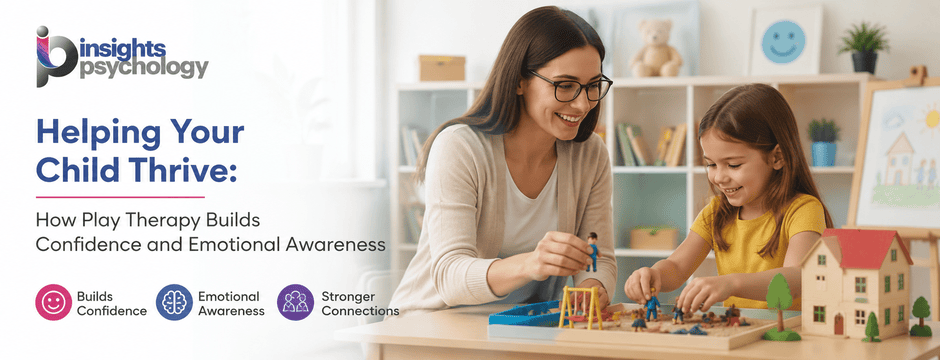
Children experience big emotions long before they have the words to explain them.
A child may feel worried about school but complain of a stomachache instead. Another may struggle with sadness but become unusually quiet, irritable, or withdrawn. A child who feels powerless may try to regain control through arguments, tantrums, or refusal.
To adults, these behaviors can look confusing or defiant. To a trained therapist, they may be a child’s way of communicating stress, fear, frustration, or an unmet emotional need.
That is where play therapy for children can help.
Play therapy gives children a developmentally appropriate way to express what they are feeling, make sense of difficult experiences, and practice healthier responses. Instead of expecting a child to sit down and explain complicated emotions, the therapist uses play, creativity, storytelling, and connection to meet the child at their current developmental level.
For families in Minnesota, play therapy can offer a supportive path toward greater confidence, emotional awareness, and resilience.
Why Children Often Communicate Through Play
Adults usually rely on conversation when they need support. Children may not yet have the vocabulary, emotional awareness, or confidence to do the same.
A child might know that something feels wrong without knowing whether the feeling is fear, disappointment, embarrassment, anger, or grief. Even when children recognize an emotion, they may worry that talking about it will upset a parent or get them into trouble.
Play gives children another language.
Through toys, games, drawings, pretend scenarios, and imaginative stories, children can express experiences that feel too complicated to describe directly. A child may create a story about a frightened animal, build a protected space with blocks, or repeatedly act out a situation involving separation, conflict, rescue, or control.
The purpose is not to analyze every toy a child chooses. A trained therapist observes patterns, emotional themes, behaviors, and interactions within the larger context of the child’s development and family life.
The Association for Play Therapy describes play therapy as a structured therapeutic process in which trained mental health professionals use the therapeutic qualities of play to help clients address psychosocial challenges and support healthy growth.
In simple terms, play therapy allows children to work through difficult feelings in a form that feels familiar, natural, and less intimidating.
Play Therapy Is More Than Playing With Toys
Parents sometimes wonder how playing in a therapy office can lead to meaningful emotional change.
Play therapy is different from ordinary recreational play. Sessions are guided by clinical goals and supported by a therapeutic relationship. The therapist selects activities and materials that allow the child to explore emotions, develop coping skills, build self-awareness, and practice new behaviors.
Depending on the child’s needs, a session might include:
- Puppets or figures for storytelling
- Drawing, painting, or other creative activities
- Sand tray work
- Role-playing exercises
- Board games that encourage patience or flexibility
- Emotion identification activities
- Movement or sensory-based play
- Problem-solving challenges
- Parent-child interaction activities
Some approaches are child-led, allowing the child to choose how to use the playroom. Others are more structured, with the therapist introducing specific exercises related to anxiety, confidence, communication, grief, or emotional regulation.
The approach should be based on the child’s age, personality, presenting concerns, developmental needs, and treatment plan.
How Play Therapy Develops Emotional Awareness
Emotional awareness begins with recognizing what is happening inside the body and learning how to name it.
Children who have difficulty identifying emotions may describe themselves as “fine” even when their behavior suggests otherwise. They may notice a racing heart, tight stomach, tense muscles, or urge to run away without understanding that these sensations may be connected to anxiety.
During therapy, a child can gradually learn to connect experiences, physical sensations, thoughts, and feelings.
For example, a therapist may help a child notice that a character in a story becomes quiet when feeling excluded. The therapist might then explore what the character needs, how the character could ask for help, and whether the child has ever experienced something similar.
This indirect approach can feel safer than asking, “Why are you upset?”
Over time, children may become better able to say:
- “I am nervous about going to school.”
- “I feel left out when my friends play without me.”
- “I get angry when I think no one is listening.”
- “I need a break before I can talk.”
- “I am scared something bad will happen.”
Learning to name an emotion does not immediately make the feeling disappear. It does, however, give the child and caregivers a clearer starting point for responding to it.
The American Psychological Association notes that mental health professionals can support children who struggle with emotional regulation, particularly when those difficulties begin affecting school, health, family relationships, or everyday functioning.
This is one reason families may seek play therapy for emotional regulation before emotional struggles become more disruptive.
How Play Therapy Helps Build Confidence
Confidence is not simply being outgoing or fearless. A confident child believes they can face challenges, make choices, recover from mistakes, and ask for help when needed.
Children may lose confidence after academic struggles, friendship problems, bullying, family changes, frequent criticism, or experiences that leave them feeling powerless. Some children become highly perfectionistic. Others avoid unfamiliar situations because they are afraid of failing.
Play therapy creates opportunities for children to experience mastery in small, meaningful ways.
A therapist may present a manageable challenge and allow the child to work through it rather than immediately stepping in. When the child experiments, adapts, and finds a solution, they begin to build a stronger sense of capability.
The child also learns that mistakes do not have to lead to shame.
A supportive therapist can model curiosity instead of criticism:
“What else could we try?”
“What did you notice?”
“That did not work the first time, but you stayed with it.”
“You found your own solution.”
These experiences help children separate their identity from their performance. Instead of thinking, “I failed, so I am not good enough,” the child begins to understand, “That was difficult, but I can try another approach.”
This is an important goal of child confidence building therapy. Confidence grows when children feel accepted, capable, and safe enough to take appropriate emotional and social risks.
Play Therapy for Anxiety in Children
Anxiety is a normal part of childhood development. Many children experience temporary fears related to separation, darkness, storms, school, unfamiliar people, or new experiences. Anxiety may require professional attention when it becomes persistent, intense, or disruptive to daily life.
Signs of anxiety can look different from one child to another. Parents may notice:
- Frequent reassurance seeking
- Avoidance of school or activities
- Trouble sleeping or recurring nightmares
- Perfectionism or fear of making mistakes
- Stomachaches or headaches without a clear medical explanation
- Irritability or emotional outbursts
- Difficulty separating from caregivers
- Withdrawal from friends
- Constant worry about safety, health, or family members
- Refusal to try unfamiliar activities
With play therapy for anxiety in children, the therapist may use stories, games, creative exercises, and gradual practice to help the child recognize anxious thoughts and develop coping strategies.
A child might create a “worry monster,” practice calming a frightened toy animal, or build a coping kit for stressful situations. These activities allow the child to approach anxiety without feeling interrogated or overwhelmed.
Play therapy may also help children practice relaxation, flexible thinking, problem-solving, and asking trusted adults for support.
It is important to recognize that play therapy is not automatically the only treatment a child may need. Some children benefit from cognitive behavioral therapy, family therapy, school support, medical evaluation, medication, or a combination of services. A qualified mental health professional should assess the child’s symptoms and recommend an individualized treatment plan.
The Centers for Disease Control and Prevention recommends beginning with an evaluation by a qualified health care or mental health professional when a child shows possible symptoms of anxiety or depression.
The Benefits of Play Therapy for Children
The potential benefits of play therapy for children depend on the child’s needs, the therapeutic approach, family participation, and consistency of care.
When clinically appropriate, play therapy may help children:
Express difficult feelings
Play offers emotional distance. A child may find it easier to show what a character feels before speaking about their own experience.
Strengthen emotional regulation
Children can practice calming strategies, frustration tolerance, impulse control, and safer ways to respond to anger or distress.
Develop problem-solving skills
Play creates low-pressure opportunities to consider choices, consequences, and alternative solutions.
Increase self-confidence
Children experience mastery when they make decisions, complete challenges, and discover that their ideas have value.
Improve communication
Therapy can help children identify feelings, express needs, set boundaries, and ask for support more clearly.
Process stressful experiences
Play may help children organize and understand experiences involving grief, family transitions, school difficulties, medical procedures, or other major changes.
Build stronger relationships
Some forms of play therapy involve caregivers and focus on trust, attachment, communication, and positive parent-child interactions.
Play-based therapeutic activities may support self-expression, creative problem-solving, self-regulation, and social competence when used as part of an appropriate clinical plan.
When Should a Parent Consider Play Therapy?
A child does not need a formal diagnosis before a parent seeks professional guidance.
Consider consulting a child therapist when emotional or behavioral changes are persistent, increasing, or interfering with everyday life.
Possible reasons to schedule an evaluation include:
- Intense or frequent tantrums
- Ongoing sadness, worry, or irritability
- School refusal
- A sudden drop in academic performance
- Difficulty making or keeping friends
- Withdrawal from previously enjoyed activities
- Aggressive behavior
- Sleep problems
- Regression in previously developed skills
- Difficulty adjusting to divorce, relocation, or a new sibling
- Grief following a death or significant loss
- Reactions to bullying or another stressful event
- Low self-esteem or frequent negative self-talk
A child may also benefit from support when parents feel that ordinary conversations and home strategies are no longer enough.
Early support does not mean something is seriously wrong with your child. It means you are paying attention and responding before the concern becomes harder to manage.
The CDC notes that early treatment of childhood mental health concerns can help reduce difficulties at home, in school, and in friendships while supporting healthier long-term development.
What Parents Can Expect From the Process
When families begin play therapy in Minnesota, the first appointment often focuses on gathering information from the parent or caregiver.
The therapist may ask about:
- The child’s developmental history
- Current behaviors and emotional concerns
- Family relationships
- School performance
- Friendships and social development
- Medical history
- Previous therapy or evaluations
- Recent stressors or changes
- Family goals for treatment
The therapist may then meet with the child and observe how they communicate, respond to limits, tolerate frustration, engage in imaginative play, and relate to adults.
Treatment goals should be specific to the child. One family may want help with separation anxiety, while another may be concerned about emotional outbursts, grief, confidence, or social withdrawal.
Parents should also receive appropriate updates and guidance. Confidentiality remains important, but caregivers need enough information to support progress outside the therapy room.
A therapist may recommend changes in routines, communication styles, discipline approaches, emotional coaching, or responses to anxious behavior. Parent involvement varies according to the child’s age, needs, and treatment model.
Finding the Right Child Play Therapist
Searching online for a child play therapist near me may bring up many options, but not every therapist has the same education, clinical experience, or specialized training.
When choosing a provider, parents can ask:
- Are you licensed to provide mental health treatment?
- What training do you have in play therapy?
- What age groups do you commonly treat?
- How do you involve parents or caregivers?
- How do you measure progress?
- What approaches do you use for anxiety or emotional regulation?
- How will we know whether the treatment plan is helping?
- What happens if my child needs another type of care?
A good therapeutic relationship should feel respectful and collaborative. The therapist should explain the process clearly, listen to parent concerns, and avoid making unrealistic promises.
Parents searching for a child therapist in Woodbury MN should also consider practical factors such as appointment availability, insurance coverage, location, telehealth options for caregiver consultations, and the therapist’s experience with the child’s specific concerns.
Helping Your Child Feel Comfortable About Therapy
Children may be unsure about meeting a therapist, especially if therapy is described as something they need because of “bad behavior.”
Use calm, neutral language.
You might say:
“You are going to meet someone who helps kids understand their feelings.”
“There will be toys, games, and activities you can use.”
“You are not in trouble. This is a place where you can get extra support.”
Avoid pressuring your child to reveal what happened during every session. Instead, create an open invitation:
“I am here if you ever want to tell me about it.”
You can also ask the therapist how to discuss treatment in a way that fits your child’s age and personality.
Support Your Child’s Growth With Insights Psychology
Children do not always tell adults that they feel anxious, discouraged, confused, or overwhelmed. Sometimes they communicate through behavior. Sometimes they become quiet. Sometimes they try to handle emotions that are simply too big to manage alone.
Play therapy can give your child a safe and developmentally appropriate space to explore those feelings.
At Insights Psychology, care begins with understanding the whole child, not simply correcting a behavior. Therapy is designed to help families identify what may be driving the concern and develop practical strategies that support emotional growth at home, at school, and in relationships.
Your child deserves to feel heard, capable, and secure. You deserve professional support that respects your concerns and includes you in the process.
Contact Insights Psychology to learn whether play therapy may be an appropriate next step for your child. A thoughtful evaluation can help your family understand what is happening and determine the type of support most likely to help your child thrive.
Frequently Asked Questions
1. What age is best for play therapy?
Play therapy is often used with young children because play matches their natural way of communicating, but it can also be adapted for elementary-aged children, preteens, and some adolescents. The best approach depends on the child’s developmental level, communication style, concerns, and treatment goals.
2. How long does play therapy take to work?
There is no universal timeline. Some children show early changes within several sessions, while others need longer-term support. The duration depends on the severity and complexity of the concerns, family involvement, session consistency, and how the child responds to treatment.
3. Can play therapy help a child with anxiety?
Play therapy may help children recognize anxious feelings, communicate fears, practice coping strategies, and build confidence. Children with significant anxiety may also need other evidence-based treatments or medical support. A mental health evaluation can help determine the most appropriate plan.
4. Are parents involved in play therapy?
Parents or caregivers are usually involved in some part of the treatment process. The therapist may schedule caregiver consultations, recommend strategies for home, or include parents in selected sessions. The level of involvement depends on the child’s age, needs, and therapeutic approach.
5. How do I know whether my child needs professional help?
Consider speaking with a mental health professional when emotional or behavioral difficulties are persistent, becoming more intense, or affecting school, sleep, friendships, family relationships, or daily activities. An evaluation does not automatically mean your child has a diagnosis. It helps clarify what support may be useful.
Play therapy for children opens the door to emotional wellness. Continue your journey by exploring the biggest myths and facts about clinical hypnosis.



