
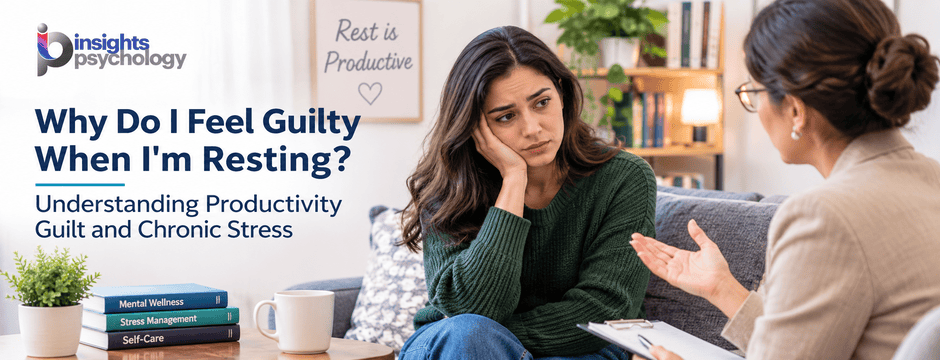
It’s Saturday afternoon. You’ve finished your errands, cleaned the house, and finally have a little time to yourself. You sit down to watch a show, but within minutes, a familiar thought appears.
Shouldn’t I be doing something more useful?
Suddenly, relaxing doesn’t feel relaxing anymore. You remember the emails you haven’t answered, the workout you skipped, or the personal goals you haven’t made progress on. Before long, you’re mentally reviewing everything you could be accomplishing instead of enjoying your free time.
If this sounds familiar, you may be experiencing productivity guilt.
For some people, resting brings an uncomfortable sense of irresponsibility, even after a demanding day. They know they’re tired, but taking a break feels like wasting time. Others struggle to enjoy weekends or vacations because they can’t stop thinking about unfinished responsibilities.
Over time, this pressure can contribute to chronic stress, emotional exhaustion, and difficulty separating personal worth from achievement.
Understanding why you feel guilty when resting is an important first step toward developing a healthier relationship with work, productivity, and yourself.
What Is Productivity Guilt?
Productivity guilt is the uncomfortable feeling that you should be accomplishing something whenever you’re not actively working toward a goal.
You might experience it while relaxing on the couch, spending time with friends, or taking a day off.
Even when your responsibilities are handled, your mind may insist that you haven’t done enough.
Unlike ordinary motivation, which can encourage you to complete meaningful tasks, productivity guilt makes it difficult to feel satisfied with what you’ve already accomplished.
You may recognize these experiences:
- Feeling uncomfortable when your schedule is empty.
- Checking work emails during personal time.
- Believing you must earn the right to relax.
- Comparing your achievements with those of other people.
- Feeling disappointed when you don’t complete your entire to-do list.
- Turning hobbies into goals that require measurable progress.
- Struggling to enjoy vacations without thinking about work.
Productivity guilt isn’t a formal mental health diagnosis. Instead, it’s a common description of feelings and behavioral patterns that may be associated with perfectionism, anxiety, stressful environments, or strongly held beliefs about achievement.
For many people, the problem isn’t a lack of free time. It’s the difficulty of allowing themselves to use that time without judgment.
Why Do I Feel Guilty When I'm Not Working?
There’s rarely one explanation for guilt when not working. Your upbringing, personal expectations, workplace culture, and previous experiences can all influence how you think about rest.
1. You Learned That Being Busy Means Being Valuable
Think about the messages you heard growing up.
Were you praised mainly for good grades, achievements, or working harder than everyone else? Did adults around you frequently associate success with constant effort?
Over time, those messages may shape the way you evaluate yourself.
You might begin believing that being productive makes you worthy of approval, while doing nothing means you’re falling behind.
As an adult, that belief can make even a short break feel uncomfortable.
The difficulty comes when productivity becomes the primary measure of your personal value.
2. Perfectionism Makes Every Accomplishment Feel Incomplete
Perfectionism can make it difficult to recognize when you’ve done enough.
You finish an important assignment, but instead of appreciating your effort, you immediately focus on what could have been better.
You complete five tasks, yet your attention remains fixed on the sixth.
For someone with perfectionistic tendencies, rest may feel like something that must be earned through flawless performance.
Because perfection is an unrealistic standard, that moment of permission may never arrive.
This can create an exhausting pattern of working harder without feeling genuinely satisfied.
3. Workplace Expectations Make It Difficult to Disconnect
Modern work environments can blur the boundaries between professional and personal life.
Emails arrive after business hours. Team messages appear during dinner. Coworkers discuss deadlines over the weekend.
Even when you’re technically off the clock, you may feel pressure to remain available.
In workplaces where long hours are praised, stepping away can seem like a sign that you’re less committed.
These expectations can contribute to rest anxiety, particularly when you’re concerned about disappointing others or being perceived as unproductive.
Importantly, this isn’t always an individual problem. Some work environments place unreasonable demands on employees, and personal coping strategies alone cannot resolve those conditions.
4. Social Media Makes You Feel Like You’re Falling Behind
You open social media during a break and see someone celebrating a promotion, launching a business, or completing an intense morning routine.
Suddenly, your quiet afternoon feels inadequate.
What you don’t see are the ordinary moments, setbacks, and breaks that make up most people’s lives.
Constant exposure to carefully selected achievements can create unrealistic expectations about how much you should accomplish.
When comparison becomes habitual, even meaningful progress may begin to feel insufficient.
What Is Rest Anxiety, and Why Does Relaxing Feel Uncomfortable?
Rest anxiety refers to feelings of nervousness, uneasiness, or distress that arise when you’re trying to slow down or stop working.
You might finally sit down after a long day but find yourself unable to settle.
Your body feels tired, yet your thoughts keep returning to upcoming responsibilities.
Some people experience rest anxiety because they’re accustomed to staying busy. Others worry that slowing down will cause them to lose control, miss opportunities, or disappoint someone.
For example, you may decide to take Sunday off but spend most of the day thinking about Monday’s workload.
The important distinction is that your body is resting while your mind remains preoccupied with responsibilities.
This experience doesn’t necessarily indicate an anxiety disorder. However, persistent difficulty relaxing may be associated with broader anxiety, chronic stress, or perfectionistic thinking.
Learning to tolerate moments without constant activity can help you gradually become more comfortable with rest.
7 Toxic Productivity Symptoms You Shouldn't Ignore
The phrase “toxic productivity” describes an unhealthy pressure to remain productive, sometimes at the expense of health, relationships, and personal well-being.
It’s not a clinical diagnosis, but it can be a useful way to recognize patterns that deserve attention.
Common toxic productivity symptoms include:
- You feel guilty when taking breaks. Even when you’re exhausted, stopping work makes you feel irresponsible.
- You rarely feel satisfied with your accomplishments. Completing one goal immediately leads to worrying about the next.
- You sacrifice sleep to finish more tasks. Rest becomes less important than meeting self-imposed expectations.
- You struggle to say no. You accept additional responsibilities even when your schedule is already overwhelming.
- You judge yourself during unproductive days. A slower day makes you question your discipline or abilities.
- Your hobbies start feeling like obligations. Activities that once brought enjoyment become another opportunity to measure progress.
- You ignore signs of exhaustion. You continue pushing yourself despite feeling mentally or physically drained.
Occasionally experiencing these behaviors doesn’t mean something is seriously wrong. However, when they become persistent, they may contribute to stress and interfere with your quality of life.
How Productivity Guilt and Chronic Stress Are Connected
Imagine spending an entire workweek meeting deadlines, managing responsibilities, and responding to unexpected problems.
By Friday evening, you’re exhausted.
Instead of recovering over the weekend, you fill your schedule with household projects, errands, and personal improvement goals.
When you finally have free time, you feel guilty about not doing more.
The result is a cycle in which opportunities for recovery keep getting pushed aside.
Chronic stress can develop when stressors continue over time without adequate relief. According to the American Psychological Association, prolonged stress can affect sleep, concentration, mood, and physical well-being.
Productivity guilt doesn’t automatically cause chronic stress, but it may make stress harder to manage when it prevents you from allowing time for recovery.
You might notice increasing irritability, reduced concentration, persistent fatigue, or less enjoyment in activities you previously liked.
These symptoms can have several possible causes. If they’re ongoing or worsening, a healthcare professional can help determine what may be contributing to them.
How to Stop Feeling Guilty for Taking Breaks
If you’ve spent years measuring your success through productivity, changing that mindset may feel uncomfortable at first.
You don’t need to abandon your ambitions. The goal is to develop a healthier balance between meaningful effort and necessary recovery.
1. Question the Belief That Rest Must Be Earned
The next time you feel guilty about taking a break, pay attention to the thought behind that feeling.
Are you telling yourself that you haven’t worked hard enough? Do you believe other people deserve rest more than you do?
Ask whether you would hold a friend to the same standard.
Most people wouldn’t tell someone they care about that they must finish every responsibility before taking a moment to recover.
Try offering yourself that same understanding.
Rest is a normal human need, not a reward reserved for perfect performance.
2. Set More Realistic Daily Expectations
An overloaded to-do list can create the impression that you’re constantly falling behind.
Instead of expecting yourself to complete everything, identify two or three meaningful priorities for the day.
Consider what genuinely needs your attention and what can reasonably wait.
At the end of the day, acknowledge what you’ve accomplished rather than focusing exclusively on unfinished tasks.
Productivity doesn’t require every available hour to be filled.
3. Practice Taking Breaks Without Multitasking
If taking a full afternoon off feels difficult, begin with shorter periods of uninterrupted rest.
Try spending ten minutes drinking coffee without checking your phone or taking a walk without listening to work-related material.
You may initially feel restless or tempted to return to something productive.
Notice those feelings without treating them as instructions.
Gradually, these experiences may help you become more comfortable with taking breaks.
4. Create Boundaries Between Work and Personal Time
Constant availability can make it difficult to mentally disconnect from work.
When possible, establish a clear end to your workday.
Turn off nonessential notifications, avoid checking emails during personal time, and communicate reasonable expectations about your availability.
If workplace demands make these boundaries difficult, consider discussing priorities and workload expectations with your supervisor.
Healthy boundaries aren’t about avoiding responsibilities. They’re about creating enough separation to support your well-being.
5. Allow Yourself to Enjoy Activities Without a Goal
Not every activity needs to improve your career, physical fitness, or financial situation.
Reading a novel, watching a movie, gardening, or spending time with friends can be worthwhile simply because you enjoy it.
Try noticing when you turn leisure activities into another opportunity for achievement.
You don’t need to finish a certain number of books, walk a particular distance, or develop a new skill to justify your free time.
Sometimes, enjoyment is enough.
6. Recognize When Your Body Needs Recovery
Persistent fatigue, difficulty concentrating, irritability, and sleep problems can occur during periods of ongoing stress.
Rather than automatically pushing through these experiences, consider whether your current routine allows enough time for recovery.
Regular sleep, physical activity, supportive relationships, and enjoyable activities can help with stress management.
If symptoms continue despite lifestyle changes, speak with a healthcare professional.
Exhaustion isn’t always caused by overwork, and medical or mental health concerns may require additional evaluation.
7. Seek Support When Guilt Becomes Overwhelming
If your mind constantly tells you that you’re not doing enough, changing those thoughts on your own may be difficult.
Professional support can help you explore where these expectations originated and how they’re affecting your daily life.
A therapist may also help you build healthier boundaries, challenge rigid standards, and develop a more balanced relationship with achievement.
Why High Achievers Often Struggle With Productivity Guilt
People who are highly motivated may find it especially difficult to slow down.
For some, achievement brings satisfaction and a sense of direction. For others, it also becomes closely connected to self-esteem.
You may worry that reducing your workload will make you less successful or cause you to lose opportunities you’ve worked hard to earn.
But ambition and self-care aren’t opposing goals.
You can remain committed to your career while recognizing that exhaustion isn’t a reliable measure of dedication.
Consider how you define a successful day.
Does it always involve completing tasks, or can it also include spending time with loved ones, getting enough sleep, or recovering from a stressful week?
Expanding your definition of success can help reduce the pressure to remain productive at every moment.
Can Therapy Help With Productivity Guilt and Perfectionism?
Yes. Therapy may help individuals who experience persistent guilt about rest, excessive self-criticism, or anxiety related to performance.
One approach that may be useful is cognitive behavioral therapy (CBT), which helps people identify unhelpful thoughts and develop more flexible ways of responding to them.
For example, someone who believes, “If I’m not working, I’m wasting my time,” may learn to examine that belief and consider a more balanced perspective.
Depending on your individual circumstances, therapy may focus on:
- Understanding the connection between self-worth and achievement.
- Addressing perfectionistic thinking patterns.
- Reducing excessive guilt around rest.
- Developing healthier workplace boundaries.
- Managing stress and anxiety.
- Building self-compassion and more realistic expectations.
Exploring therapy for perfectionism may be a helpful step if high personal standards are affecting your emotional well-being, relationships, or ability to relax.
At Insights Psychology, we understand that the pressure to constantly achieve can become exhausting. Speaking with a qualified mental health professional can give you space to explore your experiences and develop coping strategies that fit your needs.
When Should You Seek Professional Help?
Feeling guilty about taking an occasional break doesn’t necessarily require treatment.
However, professional support may be beneficial if guilt, anxiety, or self-criticism consistently interferes with your ability to rest, enjoy relationships, or manage everyday responsibilities.
Consider reaching out if you’re experiencing ongoing sleep difficulties, persistent worry, emotional exhaustion, or a significant loss of interest in activities you previously enjoyed.
These experiences deserve attention, especially when they continue despite your efforts to manage stress.
You don’t have to reach a breaking point before asking for help.
You Deserve Rest, Even When Your To-Do List Isn't Finished
There will always be another email to answer, another responsibility to handle, or another personal goal to pursue.
If you wait until everything is finished before allowing yourself to rest, you may find that the opportunity never comes.
Learning to step away from constant productivity doesn’t mean giving up on your ambitions. It means recognizing that your health, relationships, and personal life deserve attention, too.
You can care about your work without making achievement the only measure of your worth.
If productivity guilt is making it difficult to relax or enjoy everyday life, professional support may help you understand what’s keeping you stuck in that pattern.
Insights Psychology encourages you to take your emotional well-being as seriously as your responsibilities.
Ready to build a healthier relationship with productivity and rest? Contact Insights Psychology to explore therapy options for perfectionism, stress, and anxiety.
Frequently Asked Questions
1. Why do I feel guilty when I'm resting instead of working?
You may feel guilty when resting because you’ve learned to associate productivity with personal worth, success, or responsibility. Perfectionism, workplace expectations, family beliefs, and social comparison can reinforce this pattern. Recognizing these influences may help you develop a more balanced perspective on rest.
2. Is productivity guilt a sign of anxiety?
Productivity guilt isn’t a mental health diagnosis, but it can occur alongside anxiety, perfectionism, or chronic stress. If thoughts about unfinished responsibilities cause persistent worry, physical tension, or difficulty relaxing, it may be helpful to discuss these experiences with a qualified mental health professional.
3. How can I stop feeling guilty for taking breaks?
Start by challenging the belief that every moment must be productive. Set realistic priorities, schedule manageable breaks, and practice enjoying activities without measuring their usefulness. Establishing workplace boundaries and recognizing the importance of recovery may also help reduce guilt over time.
4. What is the difference between healthy productivity and toxic productivity?
Healthy productivity involves working toward meaningful goals while maintaining reasonable boundaries and allowing time for recovery. Toxic productivity describes a pattern in which the pressure to achieve begins interfering with sleep, relationships, health, or emotional well-being. The difference lies in how strongly productivity affects your daily life and sense of self-worth.
5. Can therapy help me overcome productivity guilt and rest anxiety?
Therapy may help you identify beliefs and behaviors that contribute to productivity guilt and rest anxiety. Approaches such as cognitive behavioral therapy can support more balanced thinking, healthier boundaries, and improved coping skills. Treatment depends on your individual needs, and a mental health professional can help determine an appropriate approach.
Understand What’s Behind Your Constant Need to Achieve
Productivity Guilt can make it difficult to switch off, even after a demanding day. If career uncertainty fuels your need to stay productive, explore the emotional impact of job insecurity and ways to cope with layoff fears.


