
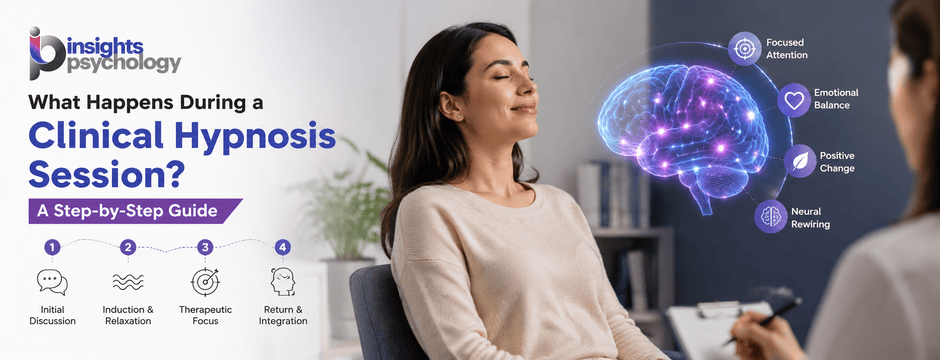
Many people are curious about hypnosis but hesitate to try it because they are unsure what actually happens during a session.
Will you lose control? Will you be unconscious? Will someone make you do something against your will?
These questions are common, and they often stop people from exploring a therapeutic approach that has helped many individuals manage anxiety, stress, habits, fears, chronic pain, and other challenges.
The reality is much different from what movies and television portray. Clinical hypnosis is a structured, evidence-based therapeutic technique used by trained mental health professionals to help individuals access a focused state of attention and increased responsiveness to positive therapeutic suggestions.
If you have been considering a hypnosis therapy session but feel uncertain about the experience, this guide will walk you through exactly what to expect from start to finish.
At Insights Psychology, we believe that informed clients make confident decisions. Understanding the process can help you feel comfortable, prepared, and ready to make the most of your therapeutic journey.
Understanding Clinical Hypnosis Before Your First Session
Before diving into the steps, it is important to understand what clinical hypnosis actually is.
Clinical hypnosis is a therapeutic method that guides individuals into a deeply focused and relaxed state. During this state, your mind becomes more receptive to positive suggestions, emotional processing, and behavior change.
Contrary to popular myths, hypnosis is not sleep. You remain aware of your surroundings, can hear your therapist’s voice, and maintain control throughout the experience.
Think of it as becoming completely absorbed in a book, movie, or daydream. You are focused, attentive, and mentally engaged, even though the outside world fades into the background.
This understanding often eases anxiety before a first hypnotherapy appointment.
Step 1: The Initial Consultation
Every successful hypnosis therapy session begins with a thorough consultation.
Your therapist will spend time learning about:
- Your current concerns
- Personal history
- Emotional challenges
- Treatment goals
- Previous therapy experiences
- Medical or mental health background
This conversation helps establish trust and creates a personalized treatment plan.
For example, someone seeking help for anxiety may have different goals than someone looking to overcome a fear of flying or stop smoking.
During this stage, your therapist will also explain the clinical hypnosis process and answer any questions you may have.
Many clients specifically ask about what happens during hypnosis, and this is the perfect time to discuss expectations, misconceptions, and treatment outcomes.
The consultation is not simply a formality. It is a critical part of ensuring that hypnosis is tailored to your unique needs.
Step 2: Establishing Goals and Desired Outcomes
Clinical hypnosis works best when there is a clear objective.
Your therapist will help define measurable goals such as:
- Reducing anxiety symptoms
- Improving confidence
- Managing stress
- Changing unwanted habits
- Improving sleep quality
- Enhancing performance
- Processing emotional experiences
Specific goals create direction for the session and help both you and your therapist evaluate progress over time.
Many clients are surprised to discover that hypnosis is not a one-size-fits-all solution. Every treatment plan is customized around the individual’s goals and circumstances.
Step 3: Creating a Comfortable Environment
Whether you are attending in person hypnosis therapy or a virtual session, comfort plays an important role.
The therapist will typically guide you to sit comfortably in a chair or recline in a relaxed position.
The environment is designed to minimize distractions and promote focus.
You may notice:
- Soft lighting
- Comfortable seating
- Calm surroundings
- Minimal interruptions
- A quiet atmosphere
The purpose is to help your mind shift away from daily stressors and become more receptive to therapeutic work.
There is no special preparation required. You do not need to wear specific clothing or do anything unusual before arriving.
Simply come with an open mind and a willingness to participate.
Step 4: The Induction Phase
This is the stage most people associate with hypnosis.
The induction is the process that helps you enter a focused and relaxed mental state.
Your therapist may use techniques such as:
- Guided breathing
- Progressive muscle relaxation
- Visualization exercises
- Focused attention exercises
- Guided imagery
You might be asked to focus on your breathing, imagine a peaceful location, or gradually relax different areas of your body.
As your attention narrows, you may notice:
- A sense of calm
- Reduced physical tension
- Increased concentration
- Less awareness of external distractions
People often describe this feeling as similar to meditation or becoming deeply absorbed in thought.
The experience varies from person to person. Some individuals feel very relaxed, while others simply notice heightened focus.
Both responses are completely normal.
Step 5: Deepening the Hypnotic State
After induction, the therapist may use additional techniques to deepen your level of concentration.
This does not mean losing awareness.
Instead, it helps strengthen your focus and engagement with the therapeutic process.
The deepening phase may involve:
- Guided counting
- Visualization exercises
- Imagining descending stairs
- Mental relaxation techniques
As concentration increases, many clients experience a greater sense of mental clarity and reduced internal chatter.
This creates an ideal environment for therapeutic intervention.
Step 6: Therapeutic Suggestion and Intervention
This is where the real therapeutic work begins.
Once you are comfortably focused, your therapist introduces carefully crafted suggestions and interventions aligned with your treatment goals.
For example:
For Anxiety
The therapist may guide you to develop feelings of calm, confidence, and emotional resilience.
For Stress Management
You may learn techniques that help your mind and body respond more effectively to challenging situations.
For Confidence Building
Positive reinforcement and visualization exercises may strengthen self-belief and reduce self-doubt.
For Habit Change
The therapist may help reshape thought patterns associated with unwanted behaviors.
The specific techniques depend on your goals and clinical needs.
Importantly, suggestions are never imposed on you.
You remain capable of accepting, rejecting, or evaluating any suggestion presented during the session.
This is one reason clinical hypnosis differs dramatically from stage hypnosis entertainment.
Step 7: Guided Mental Rehearsal
Many therapists incorporate mental rehearsal techniques.
This involves imagining yourself successfully handling future situations.
For example, someone struggling with public speaking anxiety might visualize:
- Walking confidently onto a stage
- Speaking clearly
- Remaining calm
- Feeling composed throughout the presentation
Research has shown that mental rehearsal can strengthen confidence and prepare individuals for real-life situations.
The brain often responds to vivid mental imagery in ways that support learning and behavior change.
Step 8: Returning to Full Awareness
At the conclusion of the therapeutic work, your therapist gradually guides you back to your normal state of alertness.
This process is gentle and comfortable.
You may be guided to:
- Become aware of your surroundings
- Take deeper breaths
- Stretch gently
- Open your eyes
Most clients report feeling:
- Refreshed
- Relaxed
- Calm
- Mentally clear
There is no lingering loss of control or confusion.
You are fully capable of returning to your daily activities immediately after the session.
Step 9: Post-Session Discussion
The conversation after the hypnosis portion is often just as valuable as the session itself.
Your therapist may ask:
- What did you experience?
- What stood out to you?
- How did you feel during the process?
- Were there any insights or observations?
This discussion helps reinforce learning and provides opportunities for reflection.
Many clients leave with a better understanding of their thought patterns, emotional responses, and personal strengths.
The therapist may also provide recommendations for continued progress between sessions.
How Many Sessions Will You Need?
One of the most common questions people ask is how many sessions are necessary.
The answer depends on several factors, including:
- The nature of the concern
- Duration of the problem
- Individual responsiveness
- Treatment goals
Some people notice positive changes after only a few sessions.
Others benefit from a more comprehensive treatment plan that combines hypnosis with other therapeutic approaches.
At Insights Psychology, treatment recommendations are always personalized rather than based on a predetermined number of sessions.
What Does Hypnosis Feel Like?
People often expect hypnosis to feel dramatic.
In reality, most clients describe it as:
- Deep relaxation
- Calm awareness
- Heightened focus
- Mental clarity
- Comfortable concentration
Some people feel physically light.
Others feel pleasantly heavy and relaxed.
Many clients are surprised by how normal the experience feels.
The most important thing to remember is that you remain aware and in control throughout the process.
Who Can Benefit From Clinical Hypnosis?
Clinical hypnosis may be beneficial for individuals seeking support with:
- Anxiety
- Stress
- Fears and phobias
- Sleep difficulties
- Confidence issues
- Performance anxiety
- Habit change
- Chronic pain management
When conducted by a qualified mental health professional, hypnosis can become a valuable component of a comprehensive treatment plan.
Why Professional Guidance Matters
Not all hypnosis services are created equal.
Choosing a trained mental health professional ensures that your treatment is grounded in psychological science, ethical practice, and individualized care.
Professional clinicians understand how to integrate hypnosis with evidence-based therapeutic approaches, creating a treatment experience that addresses both symptoms and underlying causes.
This level of expertise can significantly improve outcomes and help clients achieve lasting change.
Take the First Step Toward Positive Change
If you have been curious about clinical hypnosis but felt uncertain about the experience, understanding the process can make the decision much easier.
A professional hypnosis therapy session is not about losing control. It is about gaining greater control over thoughts, emotions, behaviors, and responses that may be holding you back.
Whether you are preparing for your first hypnotherapy appointment, exploring the clinical hypnosis process, or considering in person hypnosis therapy as part of your wellness journey, working with an experienced professional can provide the guidance and support you need.
At Insights Psychology, we are committed to helping individuals achieve meaningful and lasting change through compassionate, evidence-based care. If you are ready to explore new possibilities for growth, confidence, and emotional well-being, clinical hypnosis may be an excellent place to begin.
Frequently Asked Questions
1. What happens during a clinical hypnosis session?
A clinical hypnosis session begins with a consultation to discuss your goals and concerns. Your therapist then guides you into a relaxed, focused state using techniques like breathing exercises or visualization. During this state, therapeutic suggestions are tailored to your needs, and the session ends with a gradual return to full awareness followed by a discussion of your experience.
2. Will I lose control during a hypnosis therapy session?
No. You remain fully aware and in control throughout a hypnosis therapy session. Clinical hypnosis does not make you unconscious or force you to do anything against your values. You can choose to accept or reject therapeutic suggestions at any time.
3. What does hypnosis feel like?
Most people describe hypnosis as a state of deep relaxation combined with heightened focus. It often feels similar to meditation or becoming completely absorbed in a book or movie. You can hear your therapist’s voice and remain aware of your surroundings throughout the session.
4. How many hypnosis therapy sessions will I need?
The number of sessions depends on your goals, the nature of your concerns, and how you respond to treatment. Some individuals notice improvements after just a few sessions, while others benefit from a longer treatment plan that integrates hypnosis with other evidence-based therapies.
5. What conditions can clinical hypnosis help treat?
Clinical hypnosis may help with anxiety, stress, fears, phobias, sleep difficulties, chronic pain, confidence issues, performance anxiety, and unwanted habits such as smoking or procrastination. It is most effective when provided by a qualified mental health professional as part of a personalized treatment plan.
6. How should I prepare for my first hypnotherapy appointment?
There is no special preparation required for your first hypnotherapy appointment. Wear comfortable clothing, arrive with an open mind, and be ready to discuss your goals and medical or mental health history. Being well-rested and avoiding alcohol or recreational drugs beforehand can also help you stay focused during the session.
7. Is clinical hypnosis supported by scientific evidence?
Yes. Clinical hypnosis is an evidence-based therapeutic technique that has been studied for conditions such as anxiety, pain management, stress reduction, and certain behavioral changes. When performed by a trained clinician, it can be an effective complement to other psychological treatments.
Many people seeking a Hypnosis Therapy Session struggle with procrastination they can’t explain. See why ADHD could be the missing piece behind the frustration.



